In Plain Sight - 11
In Plain Sight is a weekly blog from Rhys that we will publish every Thursday/ Friday. Each edition will be focused on a thorny topic within investing, startups, learning and work and policy.
In Plain Sight is partially a personal attempt to think independently and to avoid leaning too much on AI for answers to our questions. Will we use AI to edit and polish the text? Yes. But more importantly, will we come up with all of the ideas and analysis? Yes.
Here follows Edition 11 - 'France's school protests: a rational frustration'
------
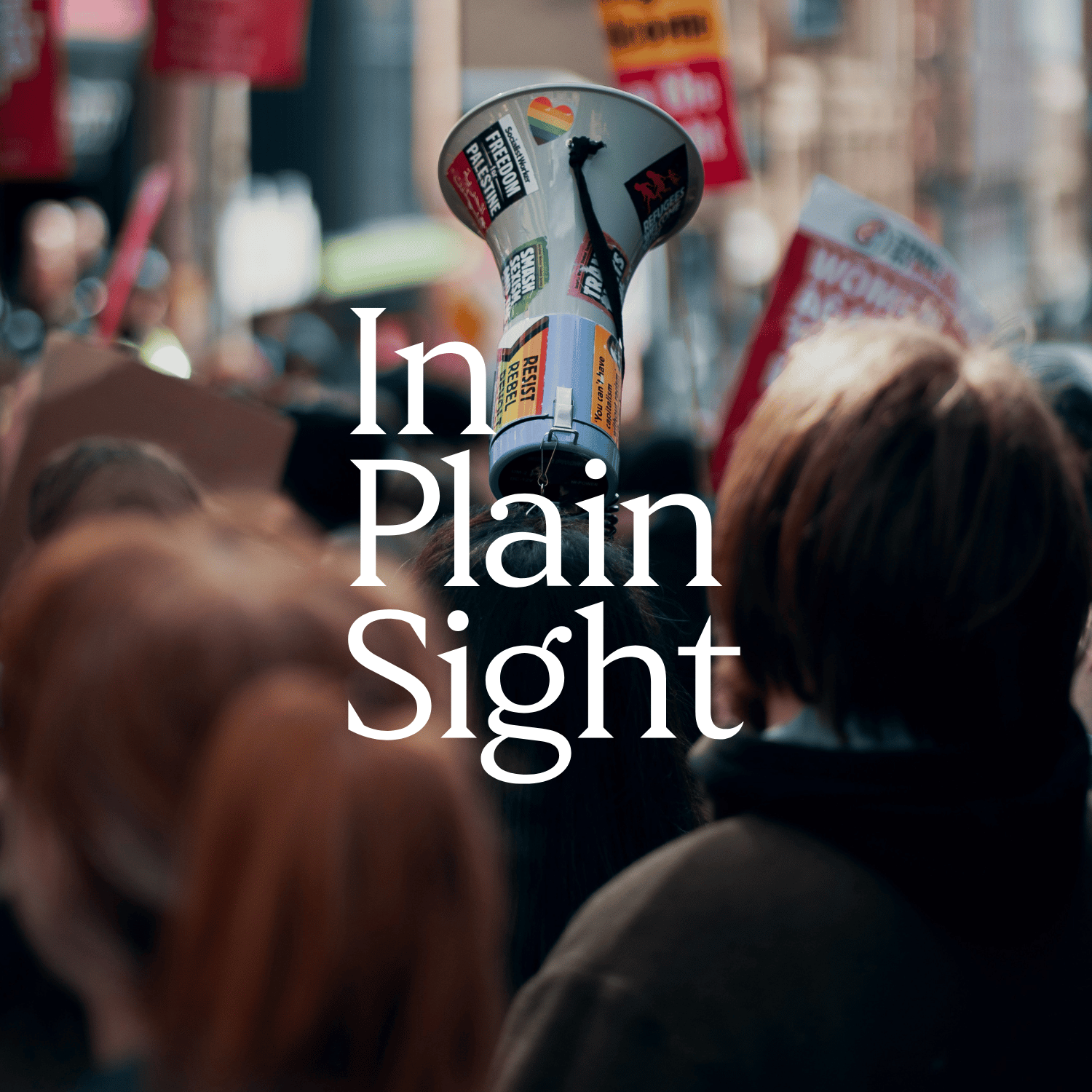
For the past three weeks, France's lycéens have been on the streets. What began on 17 September, when pupils at a school in Créteil joined their teachers in demanding more staff and resources, has spread nationwide. By early October, 735 of France's roughly 3,700 lycées had been affected in one way or another, around 30 university campuses had been blocked and we drafted this on 6th October, a national day of action.
The headlines have understandably focused on the clashes: more than 5,000 arrests, most of them minors, and serious injuries on both sides. Those deserve scrutiny in their own right. But we want to look at something else: what the students say they are worried about.
The immediate list is concrete: overcrowded classrooms, absent teachers, crumbling buildings, punishing timetables and an opaque university application process. Then, as one student put it:
"Personally I am very worried. There's climate change; there's AI, wars."
It is a short sentence, but it carries two very different kinds of grievance. We think separating them is the key to understanding what is going on.
It is tempting to- and some do - read blockades and bins on fire as teenage excess. We think that misses the point.
When the building is dilapidated, when it takes weeks to find a supply teacher, when the timetable runs from 8am to 6pm and what you are learning feels further and further from anything you can apply, frustration is a perfectly rational reaction. One teacher, Sophie Bordy, told Euronews that conditions for studying "are no longer what they were for us. It has deteriorated significantly."
The backdrop helps explain why. In March, around 30% of teachers struck (by the unions' count) against plans to cut around 4,000 posts for this school year, a decision justified by falling pupil numbers. Fewer pupils on paper does not feel like more space when your class still has no teacher on a Tuesday.
This is the first kind of grievance. We will call it the floor: the basic conditions that need to be in place before any learning happens.
It's worth bearing in mind what French education costs the student. School is free at the point of use. A public bachelor's degree costs €178 a year in registration fees, plus a €105 campus contribution (CVEC). The real cost for students (users) sits elsewhere. Living costs of €800–1,200 a month dwarf tuition, and private institutions charging €6,000–18,000 offer an alternative to those who can pay.
That is where inequality creeps back in, and "Too many inequalities, we're disgusted" was one of the placards on the march.
Further, the state is not obviously starving the system: the 2027 education budget of €65.5 billion is larger than defence.
Tom Richmond, host of 'Inside your Ed' podcast, wrote the following on Linkedin - it's instructive on the underlying funding allocation issues. He wrote:
"According to the OECD, their total expenditure per student in secondary education is $16,745 compared to $16,109 in the UK and the OECD average of $14,923.In upper secondary general education, France spends $18,175 per student compared to $17,753 in the UK and the OECD average of $13,225.
What about spending on secondary education as a percentage of GDP? In France it's 2.4% versus 2.2% in the UK and also the OECD average of 2.2%.
These figures hardly scream 'French high schools are being starved of money'.
Instead, the problem seems to lie in *how* they are spending their funding. Around this time last year, Reuters reported that of the €90 billion France will spend on schools in 2026, 28% will be consumed by..... pensions.
This explains the apparent paradox between what looks like generous spending on schools and how much money actually reaches the classroom.The more I dug into this, the more jaw-dropping it became.The annual employer contribution for teachers (and indeed all civil servants) in France is 82%."
The floor and the horizon
The second kind of grievance is different. Climate change, AI and war are not things a headteacher or a ministry can fix with a similar 'five-point plan' to the one addressed at the state of K12 in France. We'll call it the horizon: the world students are being prepared to enter.
The two are connected. If the floor is crumbling, it is much harder to feel confident about the horizon. And if the horizon looks threatening, a dilapidated classroom stops looking like an inconvenience and starts looking like evidence that nobody is preparing you for what is coming.
What we find most striking is that AI is bundled in with the other two.
Among investors and entrepreneurs, AI is widely seen as a generational unlock: a way to personalise learning, close skills gaps and make expertise cheap and abundant. We hold a version of that view ourselves. But to a 16-year-old in Créteil, AI sits in the same sentence as rising temperatures and armed conflict. It is something that happens to you, decided by people far away, with consequences you will live with longest.
That is not an irrational position either. Young people are hearing that entry-level jobs are the most exposed, that the skills they are being taught may be automated before they graduate, and that the institutions meant to prepare them are struggling to keep the heating on.
The same technology, then, is seen in two opposite ways:
- AI as unlock: more personalised learning, more access, more leverage for each individual.
- AI as threat: fewer jobs on the first rung, less control, another crisis inherited rather than chosen.
Which of these a young person experiences will depend less on the technology than on whether anyone shows them how to use it and whether the floor beneath them is solid enough to try.
This said, we should be careful not to over-interpret. A few caveats:
- One quote is not a movement. The protests have no single organiser or manifesto. Most demands are about timetables, staffing and buildings, not technology.
- Protests have their own momentum. France has a long tradition of lycéen mobilisation and social media, politics and police tactics all shape how far a movement spreads, independent of the original grievance.
- Spending is not the whole story. With a budget larger than defence and falling pupil numbers, the question may be less about how much France spends than how it is allocated, which is less dramatic but harder to protest about.
- The AI anxiety may be borrowed. Teenagers absorb the mood of the news cycle. Concern about AI may reflect what adults are saying as much as what students are experiencing.
None of these undo the central point. But they argue for listening carefully rather than projecting a neat narrative onto a messy, decentralised movement, including ours.
The students on France's streets are not asking for cheaper education. They are asking for an education that feels solid underfoot and relevant to what lies ahead. That is a reasonable thing to want.
If you are building tools that help schools fix the floor, or help young people face the horizon with more confidence, we'd love to talk to you.