In Plain Sight - 12
In Plain Sight is a weekly blog from Rhys that we will publish every Thursday/Friday. Each edition will be focused on a thorny topic within investing, startups, learning and work and policy.
In Plain Sight is partially a personal attempt to think independently and to avoid leaning too much on AI for answers to our questions. Will we use AI to edit and polish the text? Yes. But more importantly, will we come up with all of the ideas and analysis? Yes.
Here follows Edition 12 - 'The jobs "AI won't change" - and how it will change them anyway'
------
The comfort of the "safe" list
Every list of the jobs most exposed to AI comes with a reassuring flip side. Translators, copywriters, customer service agents and junior analysts sit at the top. Plumbers, nurses, hairdressers and roofers sit at the bottom.
The research broadly backs this up. When Microsoft Research mapped hundreds of thousands of Copilot conversations against occupational tasks in 2025, the roles with the lowest AI applicability were overwhelmingly physical and in person: roofers, dishwashers, nursing assistants, embalmers, dredge operators. Anthropic's Economic Index tells a similar story. AI usage clusters around desks, keyboards and screens, and thins out wherever the work involves hands, bodies, weather or grief.
The conclusion most people draw is simple. If your job needs you physically present, working with your hands or with people at a vulnerable moment, AI will largely pass you by.
We think that reading is half right. It may also be the more dangerous half to believe...
The exposure lists ask whether AI can do the task. They don't ask what happens to a job when everyone around it suddenly knows a lot more.
For two decades, looking something up meant search: ten blue links, generic and blind to your situation. Search gave you leads, not conclusions, so you still needed an expert to tell you what it all meant.
Today's models don't just retrieve, they infer. Give one a photo of your boiler's error code, its make and age, and what you've already tried and it will reason towards a diagnosis, tell you how confident it is and estimate what the fix should cost locally. The answer is tailored to you and it gets more accurate with every model generation.
That matters because many "safe" jobs were never protected only by the physical nature of the work. They were also protected by information asymmetry. The customer didn't know what was wrong, what it should cost, or whether the job had been done well. The expert did. When everyone carries a context-aware expert in their pocket, that gap starts to close.
So the real question is this:
What happens to a job AI can't do, when everyone around it knows almost as much as the person doing it?
It helps to split any job into two layers.
The work is the core act: fixing the leak, cutting the hair, lifting the patient. It's physical and situational, and here the exposure studies are right. AI won't do much of it any time soon.
The wrapper is everything around it: how customers find you, what they expect, how you're priced, trained and judged, and who carries the risk. The wrapper is mostly information, which is exactly what AI is transforming.
That's where change arrives more discretely. No one automates the plumber but the customer simply starts arriving with a second opinion.
We thought it would be interesting to look at jobs broadly considered safe from AI change, but where the role may change more than meets the eye...
Five "safe" jobs, and the change arriving by stealth
1. Plumbers and electricians
On the surface, this is about as safe as work gets. Every job is different, it happens in someone's home and it means getting your hands dirty in places no machine can reach.
What's changing is the customer. Before the plumber arrives, the homeowner has shown their phone the error code, the pipework and the noise and been told what's probably wrong and roughly what it should cost locally. The plumber spends less time diagnosing and more time confirming, or explaining why the assistant got it wrong. Quotes are easier to challenge, and the next customer is more likely to come via an AI recommendation than a neighbour. The skill stays the same. The authority and pricing power don't...
2. Nurses and care workers
Care is built on touch, judgement and being there for people at their most vulnerable. Nobody wants that handed over to software.
But the paperwork around care is already changing. AI note-taking tools, now backed by NHS England, write up consultations automatically and early trials in London report real time savings. The risk is that the time saved is absorbed into heavier caseloads rather than given back to patients. As the Nuffield Trust notes, the evidence is still emerging. Patients and families also arrive better informed and expect to talk their treatment through. The caring stays human. The pace of the shift changes.
3. Hairdressers and beauty therapists
People don't just go to a salon for the cut. They go for the skill, the conversation and an hour of being looked after.
Now clients arrive with an image of themselves already wearing the new cut or colour, generated to fit their face and hair type. "Something like this" becomes "exactly this". Booking apps adjust prices by demand and fill late cancellations automatically. And between visits, clients can get personalised advice on products and styling from their phone. The craft is unchanged, but expectations are sharper, income is less predictable and the stylist's advice now has competition.
4. Roofers and construction trades
Working at height, in all weathers, on sites where no two jobs are alike. This is some of the hardest work there is to automate.
The change happens before roofers find themselves on the roof. Drones and image analysis now produce surveys and estimates. Insurers use automated assessments to approve, reduce or reject claims. Homeowners can get an independent view on whether a repair was really needed and whether it was done properly. Whoever controls the survey increasingly controls the price and that's often not the roofer.
5. Chefs
Cooking is about taste, timing and staying calm under pressure. None of that happens on a screen.
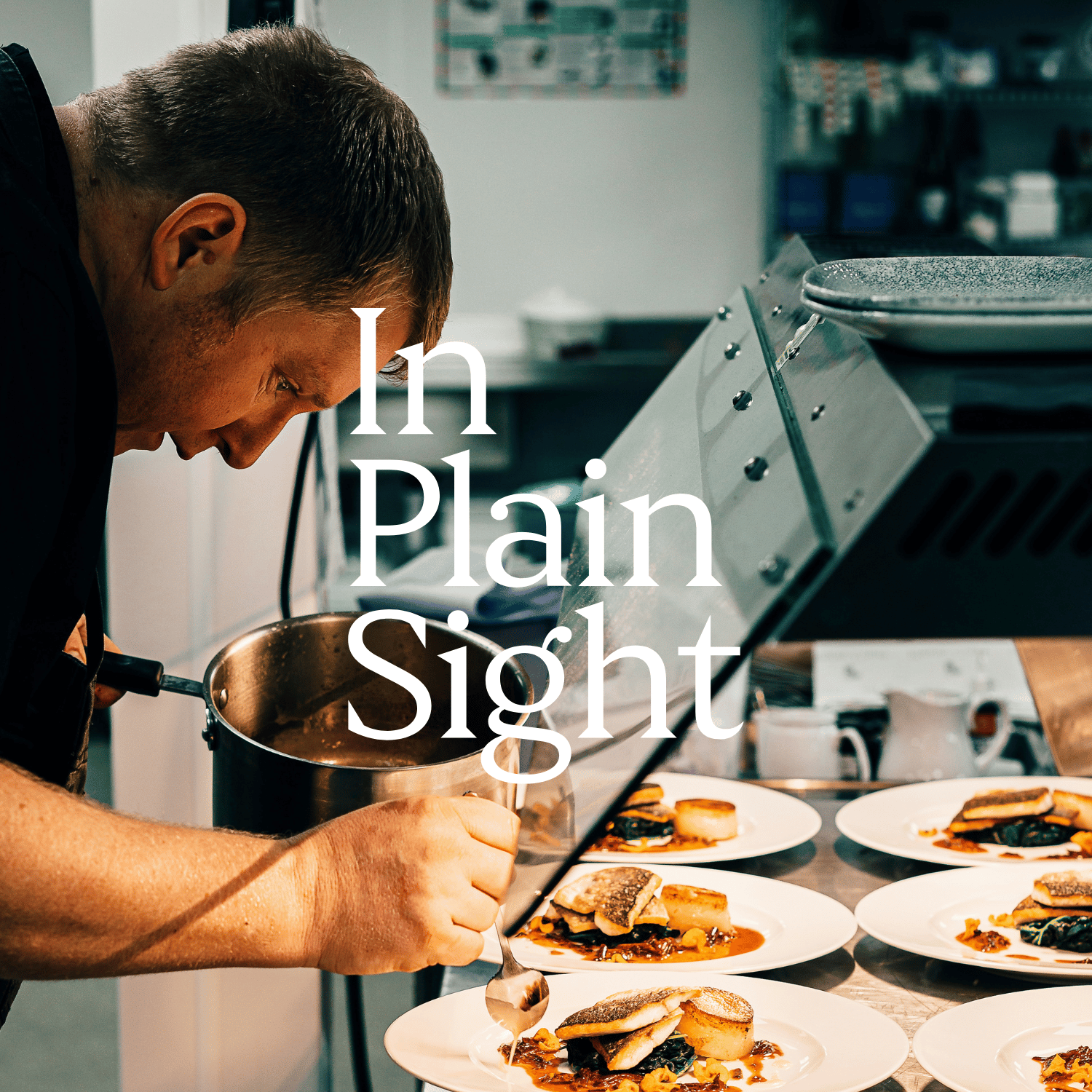
But much of what surrounds the cooking does. Forecasting tools help set menus, portions and orders. Delivery-platform data decides which dishes earn their place. Diners can check what's in a dish, and whether it's worth the money, before they order. The chef still cooks. More of the decisions about what to cook are made elsewhere.
The common threads
The same pattern repeats. The work is barely touched but the wrapper changes in five ways:
- Expectations rise. Customers arrive with tailored answers and expect professionals to engage with them.
- Information asymmetry narrows. Charging for the diagnosis gets harder; charging for judgement, skill and accountability doesn't.
- Allocation moves. AI assistants increasingly decide who gets the work.
- Measurement spreads. Whatever is easiest to track starts to define what "good" looks like.
- Power moves upstream. Whoever owns the survey, the platform or the data gains leverage over whoever does the work.
The same shift reaches into how these jobs are learned. Apprenticeship has always been partly about acquiring knowledge: which fault causes which symptom, which product suits which hair, which sign in a patient should worry you?
When a trainee can point a phone at a fuse box and get a tailored explanation, that knowledge arrives much faster. That's good for access. It could shorten training, ease shortages in the trades and care and open these careers to more people.
But if knowledge becomes abundant, what does expertise consist of?
As we've discussed elsewhere, we'd argue it shifts towards judgement under uncertainty, knowing when the model is wrong, reading a room or a building and taking responsibility for the outcome. Those are built through experience, not information. If AI lets novices skip the struggle that builds them, we risk practitioners who follow instructions brilliantly but falter when reality doesn't match the answer.
For anyone building in learning and work, this might be the design challenge: accelerate knowledge without hollowing out judgement.
Much of this change is good. Better-informed customers are less likely to be overcharged and less paperwork can mean more time with patients/ clients. Many stealth changes simply correct markets that relied on customers not knowing.
A little knowledge can be dangerous. Models aren't infallible and a confidently wrong diagnosis can make a professional's job harder. The expert's role may shift from knowing to correcting.
Adoption will be uneven. Small trades businesses, care homes and independent salons aren't fast adopters and plenty of customers will never ask an AI about their boiler.
This isn't entirely new. People have Googled their symptoms for twenty years. The difference is one of degree becoming one of kind: generic results replaced by tailored, increasingly reliable answers.
So, where does this leave us? The jobs AI can't do are not the jobs AI won't change. They're just the jobs where change arrives more discretely: through the customer's pocket, the platform's algorithm, the insurer's model and the trainee's glasses, rather than through a robot in the doorway.
The work will likely look much the same in ten years, but the wrapper may be unrecognisable.
If you're building for the millions of people doing this work, whether in skills, training, tools or marketplaces, we'd love to talk to you.