
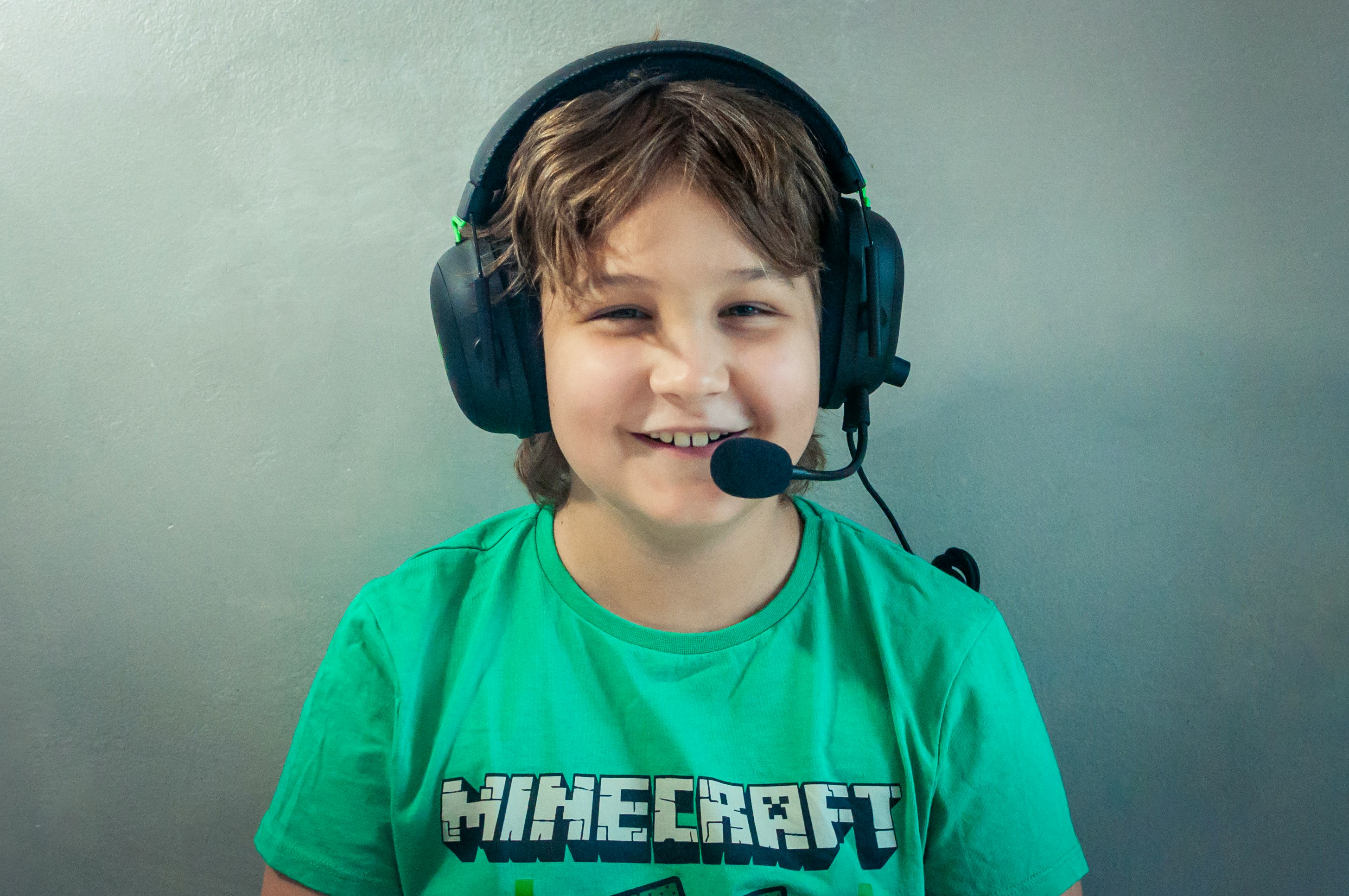
For many adults, hearing a child say they want to be a YouTuber when they grow up can trigger concern, or at least an eye-roll. It can sound unserious, unrealistic, or symptomatic of a culture that prizes fame over substance. We worry that children are aspiring to be influencers rather than engineers, teachers, nurses, founders, designers or scientists.
But that reaction may miss something important.
When a child says they want to be a YouTuber, they may not simply be saying, “I want to be famous.” They may be expressing an interest in creativity, entrepreneurship, communication, technology, identity, community and self-directed work. In other words, they may be naming one of the few careers they can actually see and understand, certainly in terms of output.
For previous generations, children aspired to be footballers, pop stars, actors, astronauts or veterinarians. These ambitions were rarely treated as literal career plans. They were projections: children naming the roles that represented excitement, mastery, recognition, freedom or purpose. “YouTuber” often plays a similar role today. It is a container for a set of aspirations that are increasingly relevant to the modern economy.
The question is not whether every child who wants to be a YouTuber should become one. Most will not, and nor should they need to.The better question is: what are they really attracted to, and what does that tell us about the capabilities young people may need in the future?
For founders, this is an interesting signal. Children’s stated ambitions often reveal more than career preferences. They show us what kinds of work feel visible, attractive and legible to the next generation. If young people grow up seeing creation, distribution, community-building and monetisation as natural activities, that matters. It points to where talent, tools, business models and markets may be heading.
The YouTuber as a young entrepreneur
At its best, content creation is a form of entrepreneurship.
Successful creators identify an audience, develop a proposition, test formats, interpret feedback, build distribution, manage partnerships, understand monetisation and adapt over time. They learn that attention is earned, trust is fragile, and consistency matters. They experience the basic realities of enterprise: there is no guaranteed demand, the market responds in real time, and the product has to keep improving.
This does not mean children need to be pushed into monetising themselves online. Quite the opposite. But the underlying instincts are worth taking seriously. A child who wants to make videos may be showing early interest in starting things, making decisions, understanding audiences and putting ideas into the world.
This is also why the creator ecosystem has become a serious area of company-building in its own right. Komi, a Brighteye portfolio company, is a good example of the infrastructure emerging around creators: tools that help people manage their presence, audience relationships, commerce and partnerships more professionally. Whether or not a young person ever becomes a full-time creator, the existence of this ecosystem tells us something important. Creation is no longer just an extracurricular activity. It sits increasingly close to entrepreneurship, distribution, brand and business operations.
AI makes this more important, not less. As generative tools lower the cost of making videos, images, scripts, audio, websites and campaigns, basic production becomes less scarce. More people will be able to create acceptable content quickly. The differentiators will increasingly be judgement, taste, originality, audience understanding, trust and distribution. The person who understands what to make, who it is for, why it matters and how to earn attention will have an advantage over the person who can simply operate a tool.
Creativity is not a soft skill
One of the most under-appreciated aspects of children’s interest in YouTube is how creative the work can be.
Making a good video involves ideation, writing, storytelling, visual design, performance, editing, pacing, sound, humour, research and audience empathy. It requires children to think not only about what they want to say, but how someone else will experience it.
Too often, education systems still treat creativity as a decorative extra rather than a core capability. Yet in many sectors, the ability to create compelling narratives, explain complex ideas, produce media and communicate across formats is increasingly valuable. Scientists need to explain their work. Founders need to pitch. Teachers need to engage. Companies need to build trust.
This is where companies such as Imagi, another Brighteye portfolio company, are relevant. Imagi supports early creative and entrepreneurial skillsets by helping young people move from passive technology use to making, designing and expressing ideas through technology. That distinction matters. The important shift is not simply that children are using digital tools earlier - it is whether they are learning to create with them, think critically about them, and use them to develop confidence, agency and imagination.
AI strengthens this case. If machines can generate more of the first draft, image, soundtrack, edit or outline, the human contribution moves elsewhere: deciding what is worth making, bringing a distinctive point of view, asking better questions, judging quality, understanding context and connecting with an audience. Early creative education cannot just be about tool use. It has to be about judgement, experimentation and the confidence to make something that reflects a point of view.
YouTube is not as unusual as it first appears
Part of the discomfort around “I want to be aYouTuber” comes from the fact that YouTube still feels, to many adults, like entertainment rather than work. But that distinction is becoming harder to maintain.
YouTube is not so different from other media that adults already recognise as legitimate. Podcasts are a parallel medium. A good podcast requires a clear editorial proposition, guest selection, production discipline, audience development, commercial thinking and regular iteration. Acast, for example, sits in this broader audio and creator economy by connecting influencers, brands and podcast media. Its marketplace logic reflects something wider happening across media: creators, audiences, advertisers and platforms are being connected in increasingly structured ways.
LinkedIn is another parallel. Professionals who post on LinkedIn are also competing for attention. They have to develop a voice, offer insight, earn trust, build distribution and keep innovating to remain relevant. Blogging has long worked in a similar way. The best bloggers are not simply publishing thoughts; they are developing arguments, serving audiences, building credibility and often creating opportunities around their expertise.
YouTube belongs in that family. It can be entertainment, but it can also be education, analysis, criticism, storytelling, documentary, journalism or community-building. A documentary-style YouTube channel, for instance, may involve research, interviewing, scripting, fact-checking, editing, rights management and editorial judgement. These are serious skills.
AI will blur these categories further. A founder, teacher, analyst or expert can now use AI tools to repurpose one idea across video, audio, written posts, newsletters and presentations. A podcast can become clips, essays, teaching material and community discussion. A YouTube video can become research, brand, distribution and product discovery.
The strategic question becomes less “which medium?”and more “how do ideas travel, compound and build trust across media?”
As more people create, and as AI makes creation easier, the bar rises. In a world of abundant content, scarcity may sit incredibility, community, curation, taste and the ability to help people navigate noise. That creates opportunities for new tools, platforms, marketplaces and learning models.
Business skills hidden in plain sight
Behind the apparent glamour of being a YouTuber is a surprising amount of operational work.
Creators have to plan content calendars, manage equipment, organise files, track performance, respond to messages, negotiate collaborations, understand revenue streams and make decisions about time. Even at a small scale, children experimenting with content can encounter basic questions of project management: What are we making? Who is it for? What do we need? When will it be finished? How will we know whether it worked?
These questions map closely onto the world of work.
They also map onto the businesses being built around modern media. Creator tools, podcast marketplaces, influencer-brand platforms, analytics products and learning technologies all recognise the same underlying pattern: media creation is increasingly operational, commercial and data-informed. Komi, Acast and Imagi are different kinds of companies, but they each point to a related shift. Komi reflects the need for creator infrastructure. Acast reflects the marketplace dynamics between creators, audiences, brands and media inventory. Imagi reflects the importance of developing creative and entrepreneurial capabilities earlier in the learning journey.
AI does not replace these themes; it accelerates them. As production becomes easier, the systems around creation - learning, workflow, monetisation, attribution, trust, partnerships and audience ownership- become more important.
In this sense, “I want to be a YouTuber” may be less a rejection of work than a desire to do work where the connection between effort, output, audience and reward is visible. Many adult jobs are opaque to children. By contrast, a video is concrete. It has a beginning, middle, end, audience and response.
That visibility is powerful. It helps children understand work as production, not just employment.
The risks are real
A balanced view must acknowledge the genuine downsides.
The creator economy can promote unrealistic expectations. A tiny minority capture a disproportionate share of attention and income. Platform algorithms are volatile. The pressure to post can be intense.Children may imitate harmful behaviours, overvalue fame, or tie self-worth to views and likes. There are also serious safeguarding, privacy and exploitation concerns.
Adults should not romanticise this world.
The increasing choreography of online life also has costs. If every post becomes a performance, young people can lose access to more private, experimental or unpolished forms of identity. They may feel that every hobby needs an audience, every interest needs a strategy, and every moment can be turned into content. That is not healthy.
AI adds further risks. It may increase the pressure to produce more, faster. It may flood platforms with low-quality or misleading content. It may make imitation easier and originality harder to identify. It may blur the line between authentic expression and synthetic performance.
But nor should adults dismiss children’s interest in YouTube as shallow. The right response is not simply to say, “That is not a real job.” It is to unpack the aspiration.
What kind of YouTuber do they imagine becoming? What would they make videos about? What do they enjoy: performing, editing, teaching, analysing, entertaining, building a community, running a business?What would they want to contribute, not just receive? And in an AI-rich environment, what would make their contribution distinctive, trustworthy or useful?
These questions turn a vague aspiration into a learning opportunity. They also turn it into a market signal. If young people are drawn to creative, flexible, audience-facing, technology-enabled work, then founders should pay attention. The opportunity is not merely to build safer platforms for young creators, although that matters. It is also to build the tools, learning environments, marketplaces and work infrastructure that help people create value in a world where media, software, commerce and education increasingly overlap.
From aspiration to capability
The most productive response to “I want to be aYouTuber” is not uncritical encouragement or reflexive dismissal. It is translation.
If a child likes filming, help them learn storytelling.
If they like editing, introduce them to design and production.
If they like gaming videos, ask what makes commentary engaging.
If they like educational channels, invite them to teach something they know.
If they like podcasts, help them think about interviewing, listening and editorial judgement.
If they like documentary YouTube, introduce them to research, evidence, narrative and journalism.
If they use AI tools, help them ask what the tool is doing, where the idea came from, what has been improved, what still needs human judgement, and whether the final output is accurate, useful and worth sharing.
In schools, this could mean treating media production as a serious interdisciplinary activity, combining literacy, computing, art, business and citizenship. For older learners, it could mean connecting creator skills to careers in marketing, product, design, journalism, teaching, sales, entrepreneurship, research, community management, audio, media and communications.
For founders, the same translation applies at market level. The point is not simply to produce more influencers. It is to understand which capabilities are becoming more valuable as AI changes the cost of production: creativity, judgement, communication, commercial awareness, audience understanding, distribution, trust and learning agility. Companies that help people develop, apply or scale those capabilities may be well placed in the next phase of work and learning.
A new language for ambition
Children name the future using the vocabulary available to them. Today, YouTube is part of that vocabulary.
When a child says they want to be a YouTuber, adults hear risk. Children may be expressing ambition. They may be saying they want to make things, reach people, be independent, build something of their own, learn creatively, and be recognised for their ideas.
Founders should hear something else too: a signal about the future of work. The aspiration points towards behaviours that are becoming more economically relevant, not less: creating, curating, communicating, building community, using tools, understanding audiences, and earning trust in public.
Naturally, not every child who dreams of becoming aYouTuber will succeed in building a large audience or making a living from it. But that is not the only measure of value. In the process of trying, they may develop skills that carry them well into many other lines of work:storytelling, communication, creativity, confidence, commercial awareness, resilience, audience understanding, digital production, editorial judgement, and the ability to keep improving.
AI makes that conclusion stronger. If content production becomes easier, the value does not disappear; it moves. It moves towards knowing what is worth saying, who it is for, how to say it well, how to build trust, how to distribute it, and how to turn attention into genuine value. Those are not narrow influencer skills. They are increasingly central skills for founders, educators, workers and companies.
In that sense, “I want to be a YouTuber” may be less a worrying answer to the question of what children want to become, and more a useful opening into the kinds of capabilities they will need:entrepreneurial thinking, creative confidence, communication, resilience, digital literacy, ethical judgement, audience understanding, and the ability to build trust in a noisy world.
Those are not bad ambitions at all.
--
Want to dive deeper? We discuss topics like this on our weekly podcast. Listen here.